Aquasana vs Berkey: NSF-Certified vs Gravity-Fed Water Filtration
These two brands attract completely different buyers, and the reason isn’t performance — it’s what each one asks you to trust. Aquasana points at third-party certification documents. Berkey points at not needing a wall outlet or a plumber. Both are legitimate positions, and which one you find persuasive says more about your situation than about the hardware.
Quick Answer
Choose Aquasana if you’re on treated municipal water and want certification you can look up — its Claryum filtration carries NSF/ANSI 42, 53, 401 and P473 certification, meaning the PFAS reduction claim is independently verified. Choose Berkey if you need filtration with no plumbing and no electricity: off-grid cabins, rentals where you can’t touch the plumbing, emergency preparedness, or untreated source water. Understand the tradeoff clearly — Berkey has never pursued NSF certification, and US availability of its replacement elements has been disrupted since a 2023 EPA order, so verify stock before committing to the platform.
The Certification Question, Stated Plainly
Aquasana’s Claryum technology is certified against NSF/ANSI standards 42 (aesthetic effects such as chlorine), 53 (health effects including lead), 401 (emerging contaminants), and P473 (PFOA/PFOS). Aquasana states Claryum reduces up to 78 contaminants. You can pull those certification listings up yourself in NSF’s certified drinking water treatment unit database, which is the entire point of certification — it converts a marketing claim into something a third party has staked its name on.
Berkey has not pursued NSF certification, and the company is upfront about why. Its position is that NSF certification is optional and, in its view, limited in how it applies to gravity-fed elements. Berkey instead points to testing by accredited third-party laboratories reporting that Black Berkey elements meet the ANSI/NSF 53 protocol and address 200+ contaminants commonly found in drinking water.
Here’s the honest read on that: “tested by a lab to a protocol” and “certified by NSF” are not the same thing. Certification includes ongoing surveillance, manufacturing audits, and retesting. A one-time lab report does not. That gap may or may not matter to you, but you should know it exists rather than discovering it after you’ve bought in.
One More Thing to Check Before You Buy a Berkey
In 2023 the EPA issued a Stop Sale, Use, or Removal Order covering Black Berkey elements, classifying them as a pesticide device under FIFRA because of their silver content. The litigation around it has continued since, and US availability of replacement Black Berkey elements has been inconsistent as a result.
This is not a performance claim — it’s a supply-chain reality. A gravity system is only as good as your ability to buy new elements for it. Check current availability of replacement elements before you commit, because a Berkey with spent elements and nothing to replace them with is a stainless steel bucket. If gravity filtration is what you need but the availability question bothers you, best gravity water filter covers the alternatives in that format.
Aquasana vs Berkey: Spec Comparison
| Spec | Aquasana (Claryum) | Berkey |
|---|---|---|
| Third-party certification | NSF/ANSI 42, 53, 401, P473 certified | Not NSF certified; maker cites accredited-lab testing to NSF 53 protocol |
| PFAS (PFOA/PFOS) | Covered by P473 certification | Manufacturer claim, no P473 certification |
| Filtration method | Claryum multi-stage cartridge under pressure | Gravity-fed through Black Berkey elements |
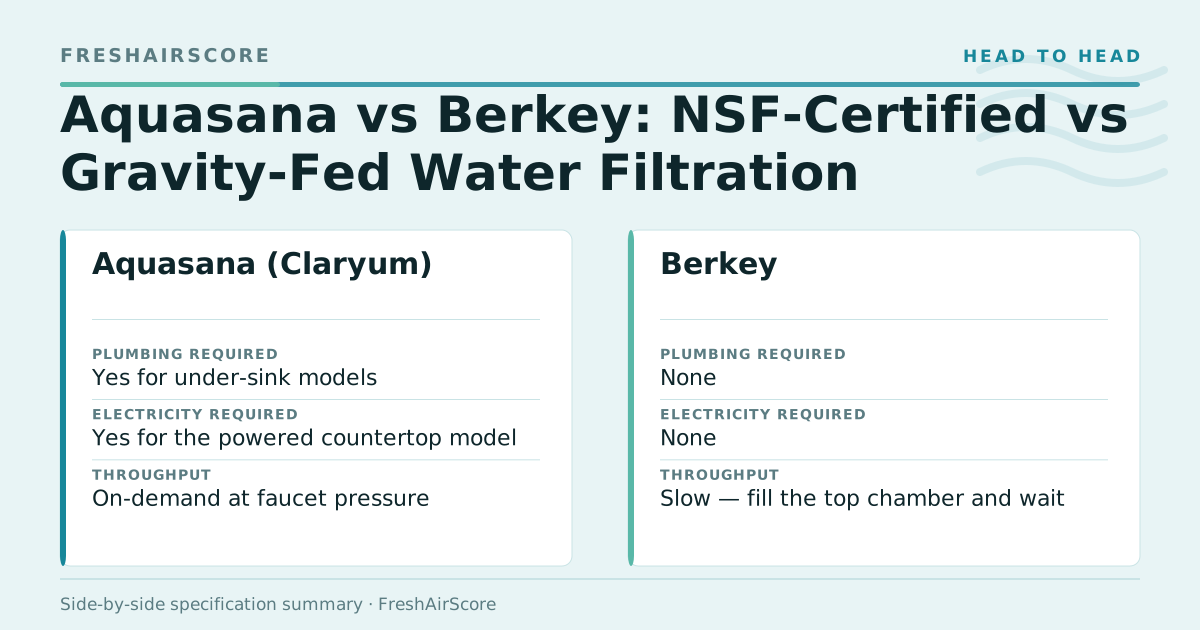
| Plumbing required | Yes for under-sink models | None |
| Electricity required | Yes for the powered countertop model | None |
| Filter life | Roughly 500 gallons / 6 months (2-stage under sink); up to 800 gallons / 6 months (3-Stage Max Flow) | Roughly 3,000 gallons per element |
| Filter maintenance | Replace cartridge; system alerts when due | Scrub elements to restore flow; replace at end of life |
| Throughput | On-demand at faucet pressure | Slow — fill the top chamber and wait |
| Untreated source water | Designed for treated municipal supply | Marketed for well, river, and untreated sources |
| Portability | Fixed install (under sink); countertop models are movable | Fully portable, disassembles |
| Mineral retention | Retains beneficial minerals (not reverse osmosis) | Retains beneficial minerals |
| Counter footprint | None for under-sink; moderate for countertop | Tall stainless chamber, permanent counter presence |
Which One Fits Your Situation
City water, a kitchen you control, and PFAS on your mind
Aquasana. This is the clearest case in the comparison. On a treated municipal supply your concerns are chlorine and chloramine taste, lead from legacy service lines, disinfection byproducts, and increasingly PFAS — and Claryum is certified against exactly that list. An under-sink install disappears entirely, delivers water at faucet pressure with no waiting, and the filter-change alert removes the main failure mode of point-of-use filtration, which is people forgetting.
If you’re weighing installation formats, under sink vs countertop water filter covers the tradeoff, and best under sink water filter ranks the category.
Renting, off-grid, or preparing for the supply going down
Berkey, availability permitting. Nothing else in this comparison works during a power outage, and nothing else installs in a rental without a landlord conversation. The gravity design has no pump to fail, no cartridge housing to leak under pressure, and no dependency on anything except the ability to pour water into the top.
That resilience is also why Berkey dominates emergency-preparedness recommendations. The element lifespan is genuinely long — around 3,000 gallons per element, versus a cartridge measured in hundreds of gallons — which is the right shape for a system you might store unused for years.
A private well or an untreated source
This is the split people get wrong most often. Berkey markets to untreated sources; Aquasana’s Claryum systems are designed downstream of municipal treatment. But a well with a real problem — coliform, nitrate, iron, hardness — is a whole-house treatment question, not a point-of-use one, and neither of these is the right first move.
Test the water first, then treat at the source; the EPA’s private wells guidance sets out which tests to run and how often, since nobody is doing it for you. Best water filter for well water and best whole house water filter cover that path. A gravity system on the counter is a sensible backup layer on a well, not the primary defense.
You want the most contaminant removal, full stop
Neither, strictly. Both retain minerals by design, which means neither is doing what reverse osmosis does. If your goal is maximum reduction across the widest contaminant list — dissolved solids, nitrate, fluoride, the works — RO is the category, and best countertop reverse osmosis covers systems that need no plumbing modification either.
Where to Buy
- Aquasana under sink water filter — Claryum 2-stage and 3-stage systems.
- Aquasana Claryum replacement filters — match the cartridge to your system model number, they aren’t universal.
- Berkey gravity water filter system — check replacement element availability before you buy the housing.
- Gravity fed countertop water filters — the broader category if you want the format without the supply question.
FAQ
Is Berkey NSF certified? No. Berkey has not pursued NSF certification and states that it considers certification optional and limited in application to gravity-fed elements. It cites accredited third-party lab testing against the NSF 53 protocol instead. That is meaningfully different from certification, which includes ongoing audits and retesting.
Is Aquasana worth it over a Berkey? On treated city water, generally yes — you get verifiable certification including P473 for PFAS, on-demand flow at faucet pressure, and no counter footprint. Berkey wins when you need filtration without plumbing or power, which Aquasana’s under-sink systems can’t offer.
Does Aquasana remove PFAS? Its Claryum filtration is certified to NSF/ANSI P473, the standard written specifically to verify PFOA and PFOS reduction. That is the strongest form of assurance available at this tier short of reverse osmosis.
How long do Berkey filters last compared to Aquasana? Not close — Black Berkey elements are rated at roughly 3,000 gallons each, while Aquasana Claryum cartridges run about 500 gallons for the 2-stage under-sink system or up to 800 gallons for the 3-Stage Max Flow, both on a roughly six-month schedule. Berkey’s long element life is one of its genuine advantages.
Can I use a Berkey for well water or river water? Berkey markets its systems for untreated sources, which Aquasana does not. That said, a private well with a known contamination problem needs source-level treatment and a water test first — a countertop gravity system is a reasonable backup, not a substitute for treating the well.
Which one is better for lead? Aquasana carries NSF/ANSI 53 certification covering lead reduction, which is the verifiable answer. Berkey claims lead reduction based on its own lab testing. If lead is your specific concern, certification is worth insisting on — what does a water filter remove breaks down which contaminants map to which standards.
Conclusion
Aquasana and Berkey aren’t really competing on filtration quality — they’re competing on what constraint you’re solving for. If you have plumbing, power, and a treated municipal supply, Aquasana gives you documented NSF/ANSI certification including PFAS coverage, no counter clutter, and water on demand. That’s the stronger everyday choice for most households.
Berkey exists for the situations Aquasana can’t reach: no plumbing, no electricity, untreated water, or a system that has to sit in a closet for three years and still work when you need it. Just go in with clear eyes on both the certification gap and the current replacement-element supply situation. If you’re comparing Berkey against other well-known names, Berkey vs Brita covers the other end of the price and capability range.