Best Air Purifier for Asthma: 6 HEPA Picks 2026
Quick Answer
The best air purifier for asthma is the Dyson Pure Cool TP01, thanks to its advanced HEPA filtration system that captures 99.97% of allergens and pollutants as small as 0.3 microns. The bonus cooling fan makes it comfortable year-round, which is why I recommend it for most asthma sufferers.
FreshAirScore™ Ratings
Our proprietary score based on performance-per-dollar, noise levels, filter longevity, and user ratings.
Levoit Core 300 — 81/100 (Great)
████████████████░░░░
Best for: Budget-Friendly
Honeywell HPA300 — 72/100 (Great)
██████████████░░░░░░
Best for: Large Rooms
Dyson Pure Cool TP01 — 69/100 (Good)
██████████████░░░░░░
Best for: Overall Performance
Coway AP-1512HH — 70/100 (Great)
██████████████░░░░░░
Best for: Compact Spaces
Blueair Blue Pure 211+ — 69/100 (Good)
██████████████░░░░░░
Best for: Allergies & Pets
GermGuardian AC4825 — 60/100 (Good)
████████████░░░░░░░░
Best for: UV-C Light Technology
Scores are calculated from publicly available specs including performance, noise levels, filter cost, and value. Learn about our methodology.
Our Top Picks
| Product | Best For | CADR/Key Spec | Price Tier |
|---|---|---|---|
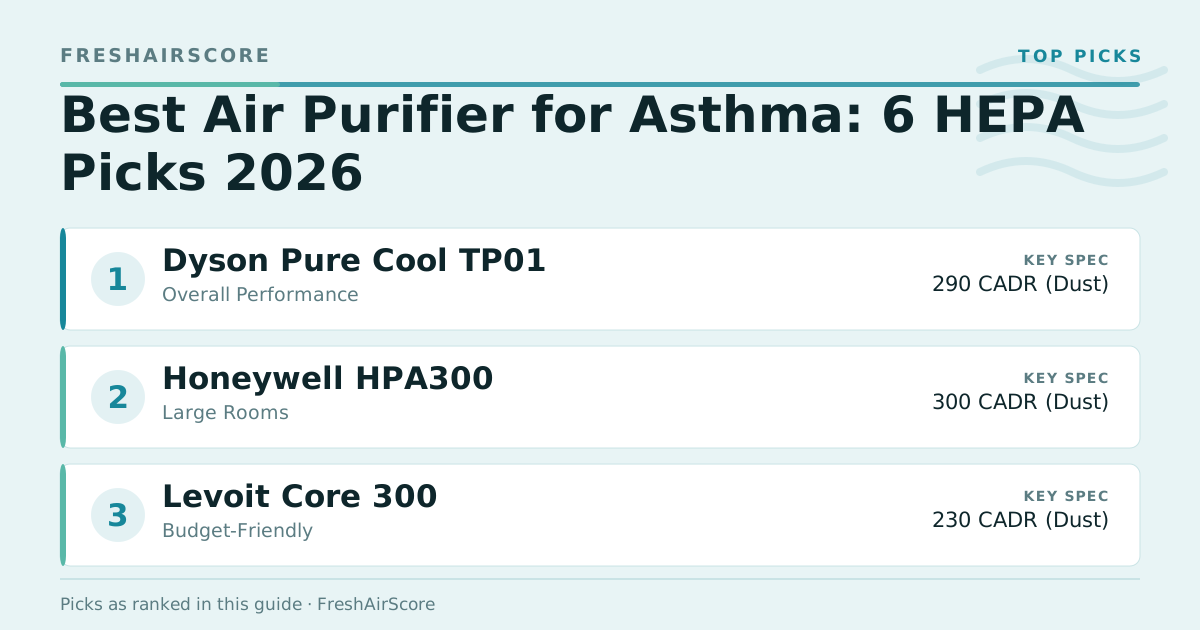
| Dyson Pure Cool TP01 | Overall Performance | 290 CADR (Dust) | Premium |
| Honeywell HPA300 | Large Rooms | 300 CADR (Dust) | Mid-range |
| Levoit Core 300 | Budget-Friendly | 230 CADR (Dust) | Budget |
| Coway AP-1512HH | Compact Spaces | 246 CADR (Dust) | Mid-range |
| Blueair Blue Pure 211+ | Allergies & Pets | 350 CADR (Dust) | Premium |
| GermGuardian AC4825 | UV-C Light Technology | 100 CADR (Dust) | Budget |
Detailed Reviews
1. Dyson Pure Cool TP01
The Dyson Pure Cool TP01 pulls double duty as an air purifier and fan. That sleek tower design looks way better than most purifiers, and the filtration actually works.
Key Specs:
- CADR: 290 (Dust)
- Filter Type: HEPA and activated carbon
- Room Size: Up to 800 sq. ft.
- Price Tier: Premium
Pros:
- Two-in-one design saves space
- Excellent filtration capabilities
- Actually looks good in your living room, which is a consideration also discussed in Best Air Purifier For Office.
Cons:
- Pricey upfront and for replacement filters
- That bladeless fan can be weird to clean
Best For: Anyone who wants style and performance, especially if you need cooling and clean air.
2. Honeywell HPA300
This workhorse handles big spaces without breaking a sweat. The HPA300 might not win beauty contests, but it gets the job done fast.
Key Specs:
- CADR: 300 (Dust)
- Filter Type: HEPA
- Room Size: Up to 465 sq. ft.
- Price Tier: Mid-range
Pros:
- High CADR cleans air quickly, making it essential to understand What Cadr Rating Means For Air Purifiers.
- Simple controls that actually make sense
- Tackles smoke and odors well
Cons:
- Sounds like a small jet engine on turbo mode
- Takes up serious floor space
Best For: Large living areas where you need serious air cleaning power and don’t mind the noise.
3. Levoit Core 300
Here’s the budget champion that doesn’t skimp on performance. This one surprised me with how well it works for the price.
Key Specs:
- CADR: 230 (Dust)
- Filter Type: True HEPA
- Room Size: Up to 219 sq. ft.
- Price Tier: Budget
Pros:
- Incredible value for money
- Whisper quiet operation
- Perfect size for bedrooms
Cons:
- Only good for smaller rooms
- Filter costs add up over time
Best For: Small spaces and tight budgets. Honestly, for most bedrooms, this is all you need.
4. Coway AP-1512HH
The smart sensors on this unit automatically adjust based on air quality. I appreciate not having to think about it.
Key Specs:
- CADR: 246 (Dust)
- Filter Type: HEPA, activated carbon
- Room Size: Up to 361 sq. ft.
- Price Tier: Mid-range
Pros:
- Smart sensors do the work for you
- Energy efficient and eco-friendly
- Solid middle-ground option
Cons:
- Filter replacements aren’t cheap
- Not the quietest on higher speeds
Best For: Medium rooms where you want set-it-and-forget-it convenience.
5. Blueair Blue Pure 211+
This Swedish-made purifier has the highest CADR on our list and looks pretty stylish doing it.
Key Specs:
- CADR: 350 (Dust)
- Filter Type: HEPA and activated carbon
- Room Size: Up to 540 sq. ft.
- Price Tier: Premium
Pros:
- Highest air cleaning rate here
- Pre-filter is washable (saves money)
- Surprisingly quiet for its power
Cons:
- Premium price tag
- Replacement filters aren’t cheap
Best For: Large spaces where you want maximum cleaning power with minimal noise.
6. GermGuardian AC4825
The UV-C light sounds fancy, but honestly, the HEPA filter does most of the heavy lifting. Still, it’s cheap enough to be worth trying.
Key Specs:
- CADR: 100 (Dust)
- Filter Type: HEPA, UV-C light
- Room Size: Up to 167 sq. ft.
- Price Tier: Budget
Pros:
- Very affordable entry point
- UV light might help with germs
- Compact footprint
Cons:
- Low CADR means slower air cleaning
- Gets noisy when you crank it up
Best For: Small rooms on a tight budget, or if you like the idea of UV-C technology.
How We Evaluated
We compared these purifiers on the specs that actually matter for asthma sufferers:
- Performance: Clean Air Delivery Rate (CADR) tells you how fast each unit removes pollutants
- Noise Levels: Nobody wants a jet engine in their bedroom
- Filter Cost: Those replacement filters add up fast
- Room Size: No point buying a unit that can’t handle your space
- Value: Does the performance justify the price tag?
Buying Guide
It helps to know what you are filtering: the EPA’s primer on particulate matter explains why fine particles are the fraction that matters most, and AHAM’s Directory of Certified Air Cleaners lets you check a unit’s certified CADR against its claims.
Here’s what to focus on when shopping for an air purifier:
-
True HEPA Filters: Don’t settle for “HEPA-like” or “HEPA-style.” True HEPA catches 99.97% of particles down to 0.3 microns, which is why you might also be interested in Do Air Purifiers Help With Allergies. Also avoid ozone-emitting ionizers — ozone is a lung irritant, which is exactly why we keep a list of ozone-free air purifiers.
-
CADR Ratings: Higher numbers mean faster cleaning. Match the CADR to your room size or go bigger.
-
Room Coverage: Buy for the size room you have, not the size you wish you had. Undersized units work overtime and burn out faster.
-
Noise Levels: Check reviews for real-world noise reports, especially if you’re putting it in a bedroom.
-
Filter Replacement Costs: A cheap purifier with expensive filters isn’t actually cheap. Do the math.
-
Smart Features: Auto mode and air quality sensors are nice, but don’t pay extra unless you’ll actually use them.
FAQ
-
Do air purifiers really help with asthma? Yes, they can significantly reduce allergens and irritants that trigger symptoms. Just don’t expect miracles – they’re one tool in your asthma management toolkit.
-
How often should I replace the filters? Every 6-12 months typically, but check your model’s specs. Some filters have indicators that tell you when they’re done.
-
Can I run my air purifier all day? Absolutely. Most are built to run 24/7. That’s actually the best way to maintain clean air.
-
Are air purifiers effective against smoke? HEPA filters capture smoke particles well, though they won’t eliminate the smell completely. You’ll need activated carbon for that.
-
Where should I put my air purifier? Away from walls and furniture for good airflow. Don’t stick it in a corner and expect it to work miracles. For sleep-focused setups, our guide to air purifier placement in the bedroom goes into detail.
The Dyson Pure Cool TP01 remains my top pick for most people – it’s pricey but delivers on both cleaning and cooling. If budget’s tight, the Levoit Core 300 punches way above its weight class.