Best Air Purifier for Baby Room: 5 Quiet Nursery Picks
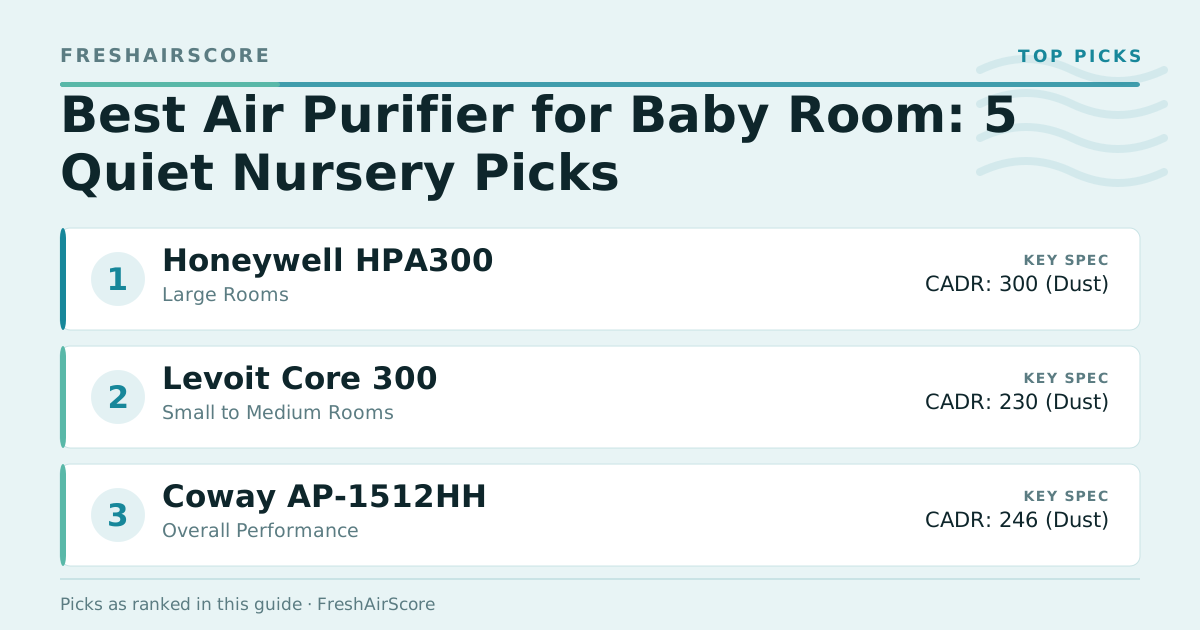
Quick Answer
The best overall air purifier for a baby room is the Honeywell HPA300. It packs a high Clean Air Delivery Rate (CADR), true HEPA filtration, and handles large rooms with ease—perfect for keeping your little one’s air clean.
FreshAirScore™ Ratings
Our proprietary score based on performance-per-dollar, noise levels, filter longevity, and user ratings.
Levoit Core 300 — 81/100 (Great)
████████████████░░░░
Best for: Small to Medium Rooms
Honeywell HPA300 — 72/100 (Great)
██████████████░░░░░░
Best for: Large Rooms
Coway AP-1512HH — 70/100 (Great)
██████████████░░░░░░
Best for: Overall Performance
Dyson Pure Cool TP01 — 69/100 (Good)
██████████████░░░░░░
Best for: Multi-Functional
Blueair Blue Pure 211 — 69/100 (Good)
██████████████░░░░░░
Best for: Energy Efficiency
Scores are calculated from publicly available specs including performance, noise levels, filter cost, and value. Learn about our methodology.
Our Top Picks
| Product | Best For | CADR / Key Spec | Price Tier |
|---|---|---|---|
| Honeywell HPA300 | Large Rooms | CADR: 300 (Dust) | Mid-range |
| Levoit Core 300 | Small to Medium Rooms | CADR: 230 (Dust) | Budget |
| Coway AP-1512HH | Overall Performance | CADR: 246 (Dust) | Budget |
| Dyson Pure Cool TP01 | Multi-Functional | CADR: 290 (Dust) | Premium |
| Blueair Blue Pure 211 | Energy Efficiency | CADR: 350 (Dust) | Mid-range |
Detailed Reviews
1. Honeywell HPA300
Overview:
This powerhouse handles rooms up to 465 square feet, which means it’ll work great even if your baby’s room doubles as a play area.
Key Specs:
- CADR: 300 (dust)
- Filter Type: True HEPA
- Room Size: Up to 465 sq. ft.
- Price Tier: Mid-range
Pros:
- High CADR cleans air fast
- True HEPA filter captures 99.97% of particles
- Controls are dead simple
Cons:
- Gets pretty loud on high settings—not great during naps
- Takes up considerable floor space
Best For Whom:
Parents who need serious air cleaning power for larger spaces and don’t mind the size.
2. Levoit Core 300
Overview:
This compact unit punches above its weight class. Perfect for typical nursery sizes and won’t wake a sleeping baby.
Key Specs:
- CADR: 230 (dust)
- Filter Type: True HEPA
- Room Size: Up to 219 sq. ft.
- Price Tier: Budget
Pros:
- Whisper-quiet operation—seriously impressive
- Budget-friendly without cutting corners on filtration
- Looks good in any nursery
Cons:
- Won’t cut it for bigger rooms
- Replacement filters add up over time
Best For Whom:
Parents with standard-sized nurseries who want proven performance without breaking the bank.
3. Coway AP-1512HH
Overview:
The smart choice for parents who like their tech. This one surprised me with how well the air quality indicator actually works.
Key Specs:
- CADR: 246 (dust)
- Filter Type: True HEPA
- Room Size: Up to 361 sq. ft.
- Price Tier: Budget
Pros:
- Energy-efficient and eco-friendly
- Air quality light gives you real-time feedback
- Runs quietly even on higher settings
Cons:
- Costs more upfront than basic models
- Filter replacements are pricey
Best For Whom:
Tech-savvy parents who want effective cleaning with smart monitoring features.
4. Dyson Pure Cool TP01
Overview:
A fan and air purifier rolled into one. Honestly, it’s overkill for most baby rooms, but if you’ve got the budget and want the bells and whistles, here you go.
Key Specs:
- CADR: 290 (dust)
- Filter Type: HEPA and activated carbon
- Room Size: Up to 600 sq. ft.
- Price Tier: Premium
Pros:
- Cools the room while cleaning air
- Sleek design with handy remote
- Advanced dual filtration system
Cons:
- Way overpriced for what most people need
- Probably too much machine for a small nursery
Best For Whom:
Parents who want a premium, multifunctional device and don’t mind paying for the Dyson name.
5. Blueair Blue Pure 211
Overview:
This Swedish-made unit combines solid performance with surprisingly good looks. The fabric pre-filter is a nice touch—just toss it in the wash.
Key Specs:
- CADR: 350 (dust)
- Filter Type: HEPA
- Room Size: Up to 540 sq. ft.
- Price Tier: Mid-range
Pros:
- Super energy-efficient and quiet
- One-button simplicity (can’t mess it up)
- Washable fabric pre-filter saves money
Cons:
- Replacement HEPA filters aren’t cheap
- Limited color choices might not match your style
Best For Whom:
Parents who want efficient cleaning with Scandinavian style points can also consider Best Air Purifier For Large Rooms.
How We Evaluated
We compared these units against several key criteria:
- Performance: CADR ratings tell you how much clean air you actually get per minute
- Noise: Measured decibel levels because nobody wants to wake a sleeping baby
- Filter Cost: Calculated long-term expenses—some “cheap” units cost more over time
- Room Size: Made sure each unit can actually handle the space it claims
- Value: Balanced performance against price, because not everyone needs a flagship unit
Buying Guide
Two independent references keep this honest: certified CADR figures in AHAM’s Directory of Certified Air Cleaners, and the EPA’s page on ozone generators sold as air cleaners for the ionizer and ozone claims that still turn up in this category.
Here’s what actually matters when shopping for a baby room air purifier:
- CADR Rating: Higher numbers mean faster cleaning. Look for 200+ for most nurseries in our guide on How To Choose An Air Purifier.
- Filter Type: True HEPA filters are non-negotiable—they catch 99.97% of particles, as discussed in What Cadr Rating Means For Air Purifiers.
- Noise Levels: Check the decibel ratings. Anything under 50dB on low is good for sleeping.
- Room Size: Buy for your actual room size, not the manufacturer’s optimistic claims.
- Ease of Use: Skip complicated controls. You’ll be operating this thing sleep-deprived.
FAQ
1. How often should I run an air purifier in my baby’s room?
Keep it running 24/7, as recommended in our article on Do Air Purifiers Help With Allergies. Air doesn’t take breaks, and neither should your purifier.
2. Are air purifiers safe for babies?
Absolutely. HEPA-filtered air is cleaner and safer than regular room air. Just steer clear of ionizers — stick to the ozone-free purifiers we’ve rounded up separately.
3. How often do I need to replace the filters?
Every 6-12 months typically, but check your unit’s indicator light if it has one.
4. Can I use an air purifier while my baby is sleeping?
That’s exactly when you want to use it. Just keep it on the lowest setting. Getting the placement right matters too — our guide on where to place an air purifier in a bedroom applies to nurseries as well.
5. What size air purifier do I need for a baby room?
For most nurseries (150-250 sq. ft.), aim for a CADR above 200. Better to go slightly bigger than struggle with an undersized unit.
Clean air isn’t a luxury for babies—it’s essential. A good air purifier is one of the smartest investments you can make for your nursery.