Best Air Quality Monitors for Home: CO2, VOC & Radon
Quick Answer
The Eve Room 3 is our top pick for home air quality monitoring. It delivers accurate VOCs and CO2 readings, looks great on any shelf, and plays nice with smart home setups. The app is actually useful, and the battery lasts longer than you’d expect.
FreshAirScore™ Ratings
Our proprietary score based on performance-per-dollar, noise levels, filter longevity, and user ratings.
Temtop M10 — 88/100 (Excellent)
██████████████████░░
Best for: Budget-Friendly Option
Eve Room 3 — 86/100 (Excellent)
█████████████████░░░
Best for: Smart Home Integration
Airthings Wave Plus — 78/100 (Great)
████████████████░░░░
Best for: Radon Detection
Dylos DC1700 — 73/100 (Great)
███████████████░░░░░
Best for: Particle Monitoring
IQAir AirVisual Pro — 67/100 (Good)
█████████████░░░░░░░
Best for: Comprehensive Monitoring
Scores are calculated from publicly available specs including performance, noise levels, filter cost, and value. Learn about our methodology.
Our Top Picks
| Product | Best For | CADR/Key Spec | Price Tier |
|---|---|---|---|
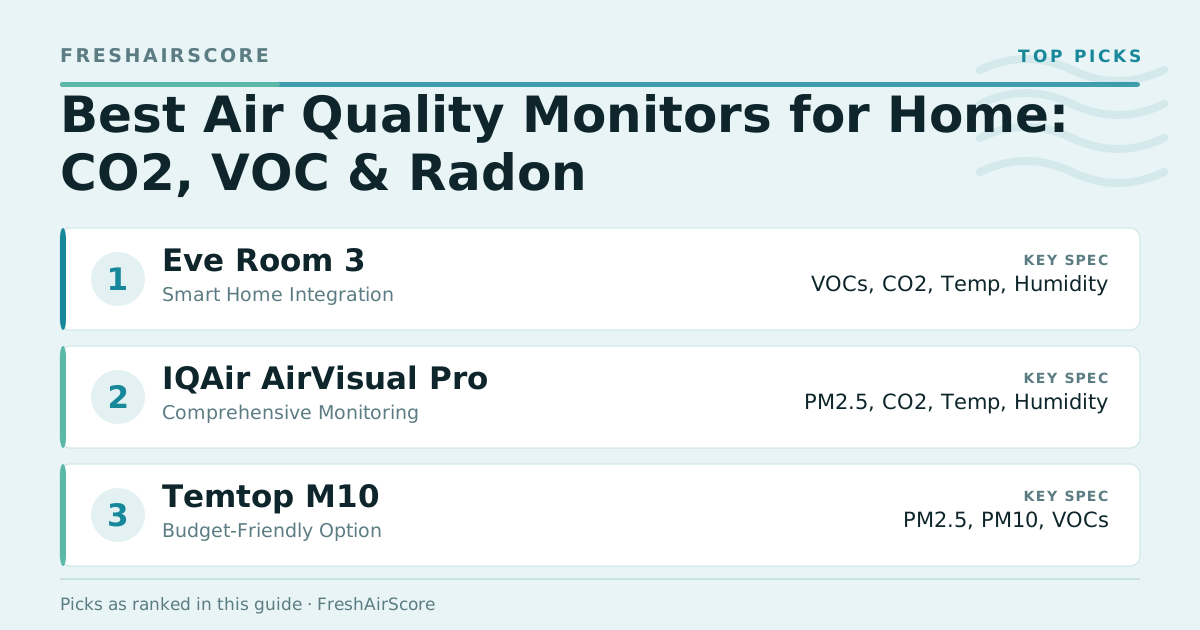
| Eve Room 3 | Smart Home Integration | VOCs, CO2, Temp, Humidity | Budget |
| IQAir AirVisual Pro | Comprehensive Monitoring | PM2.5, CO2, Temp, Humidity | Premium |
| Temtop M10 | Budget-Friendly Option | PM2.5, PM10, VOCs | Budget |
| Dylos DC1700 | Particle Monitoring | PM2.5, PM10 | Premium |
| Airthings Wave Plus | Radon Detection | Radon, VOCs, CO2, Temp | Mid-range |
Detailed Reviews
1. Eve Room 3
Overview: This sleek little cube tracks VOCs, CO2, temperature, and humidity while looking like it belongs in a design magazine. If you’re already in Apple’s ecosystem, it’s a no-brainer.
Key Specs:
- Measurement Types: VOCs, CO2, Temperature, Humidity
- Connectivity: Bluetooth, HomeKit
- Battery Life: Up to 6 weeks
Pros:
- Sleek design
- Integrates seamlessly with Apple HomeKit
- Detailed app with historical data
Cons:
- Limited to Apple devices
- Higher price point compared to basic models
Best For: Apple users who want something that actually looks good on the nightstand.
2. IQAir AirVisual Pro
Overview: The Rolls-Royce of air monitors. This thing does everything – PM2.5, CO2, temperature, humidity, plus it tries to predict tomorrow’s air quality. The 5-inch screen is gorgeous, but you’ll pay for all that tech.
Key Specs:
- Measurement Types: PM2.5, CO2, Temperature, Humidity
- Display: 5-inch color screen
- Connectivity: Wi-Fi, app support
Pros:
- Comprehensive monitoring capabilities
- Real-time air quality forecasting
- High accuracy
Cons:
- Higher price tag
- Some users report connectivity issues
Best For: Data nerds who want every possible air quality metric and don’t mind paying premium-tier prices for it.
3. Temtop M10
Overview: The scrappy underdog. Sure, it’s not winning design awards, but for basic PM2.5, PM10, and VOC readings, it gets the job done at a fraction of the price. This one surprised me with how accurate it is.
Key Specs:
- Measurement Types: PM2.5, PM10, VOCs
- Battery Life: Up to 8 hours
- Display: LCD screen
Pros:
- Affordable price
- Lightweight and portable
- Easy to use
Cons:
- Limited features compared to higher-end models
- Battery life could be improved
Best For: Anyone who just wants to know if their air is clean without breaking the bank.
4. Dylos DC1700
Overview: This thing is built like a tank and focuses solely on particle counts. If you care about dust and pollen but couldn’t care less about VOCs or smart features, it’s solid. Just don’t expect it to win any beauty contests.
Key Specs:
- Measurement Types: PM2.5, PM10
- Display: Digital with numerical readout
- Power Source: AC adapter
Pros:
- Excellent accuracy for particle monitoring
- Simple interface
- Long-lasting durability
Cons:
- Lacks VOC measurement
- Bulky design
Best For: People who live in dusty areas or have serious particle allergies and want laser-focused monitoring.
5. Airthings Wave Plus
Overview: The Swiss Army knife of air monitors. Radon detection is its party trick, but it also handles VOCs, CO2, and temperature. The 16-month battery life is genuinely impressive, though all those features might overwhelm casual users. We also put it head-to-head with a popular rival in our Awair vs Airthings comparison.
Key Specs:
- Measurement Types: Radon, VOCs, CO2, Temperature
- Connectivity: Bluetooth, app support
- Battery Life: Up to 16 months
Pros:
- Includes radon detection
- Long battery life
- Easy to set up and use
Cons:
- Advanced features may be overwhelming for some
- Higher price for the complete package
Best For: Homeowners worried about radon (especially in basements) who want comprehensive monitoring.
How We Evaluated
We compared these monitors on the specs that actually matter:
- Performance: How accurately they measure what they claim to measure
- Noise: Nobody wants a whirring device in their bedroom
- Filter Cost: Ongoing maintenance expenses (though most monitors don’t have filters)
- Room Size: Whether they work in studio apartments or great rooms
- Value: Bang for your buck – expensive doesn’t always mean better
Buying Guide
Numbers need context. AirNow’s explanation of the AQI scale explains the AQI bands, and the EPA’s primer on particulate matter covers why the fine-particle reading is the one to watch.
Here’s what to actually think about before buying:
- Measurement Types: Figure out what you’re worried about. If it’s about dust and allergens, consider reading about Best Air Purifier For Dust Mites. Dust and pollen? Go PM2.5. Chemical smells? VOCs matter — and if readings run high, an air purifier built for VOCs is the fix. Stuffy rooms? CO2 tracking helps.
- Connectivity Options: Smart features are nice if you’ll use them, pointless if you won’t. Don’t pay extra for app integration you’ll ignore.
- Display Quality: Some screens are impossible to read from across the room. You might want to learn more about How To Choose An Air Purifier for tips on selecting the right features. Others blind you at night.
- Portability: Battery-powered units let you test different rooms, but wall-powered ones never die on you.
- Price and Warranty: Don’t assume expensive equals accurate. For more insights, check our post on What Cadr Rating Means For Air Purifiers. Some budget options punch above their weight.
FAQ
1. What is an air quality monitor? A device that measures pollutants floating around your home and tells you if your air is clean or gross.
2. Do I need an air quality monitor in my home? If you have allergies, asthma, or just get curious about why your bedroom feels stuffy, they’re helpful. You might also want to check out our guide on Do Air Purifiers Help With Allergies. Not essential, but useful.
3. How often should I check my air quality? Most good monitors update continuously. Check the app when you remember, but don’t obsess over every reading.
4. Can air quality monitors help with allergies? They identify problems but don’t fix them. Think of them as smoke detectors for air quality – they’ll tell you something’s wrong so you can do something about it.
5. What is the difference between portable and stationary air quality monitors? Portable ones run on batteries so you can move them around. Stationary ones plug into the wall and usually give more consistent readings since they’re always powered.
Recommendation
The Eve Room 3 hits the sweet spot of accuracy, design, and smart features if you’re an Apple user. Honestly, the Temtop M10 gives you 80% of the functionality for a third of the price – I’d go with that unless you really need the fancy integrations. Got radon concerns? The Airthings Wave Plus is your only real choice in this price range.