Are Air Purifiers Worth It
Are Air Purifiers Worth It?
Quick Answer
Yes, air purifiers are generally worth buying, especially if you deal with allergies, asthma, or just want cleaner air at home. They do a solid job removing pollutants, allergens, and odors. But here’s the thing – not all purifiers are created equal. The effectiveness comes down to specs like Clean Air Delivery Rate (CADR), filter type, and matching the unit to your room size.
Keep two references open while you compare models: the EPA’s guide to air cleaners in the home, which explains where portable cleaners fit alongside ventilation and source control, and AHAM’s Directory of Certified Air Cleaners, where a claimed CADR can be checked against a certified figure.
Understanding Indoor Air Quality
The Importance of Indoor Air Quality
Your indoor air is probably dirtier than you think. The EPA found that indoor air can be two to five times more polluted than outdoor air. That’s pretty wild. Common culprits floating around your home include:
- Dust mites
- Pollen
- Pet dander
- Tobacco smoke
- Volatile Organic Compounds (VOCs) from household products
Poor air quality can trigger respiratory issues, headaches, and allergies. Air purifiers tackle these problems by filtering out the nasty stuff.
How Air Purifiers Work
Air purifiers use different tech to clean your air:
-
HEPA Filters: These workhorses capture 99.97% of particles as small as 0.3 microns. Great for allergens and dust.
-
Activated Carbon Filters: These absorb odors and gases – perfect if you have pets or someone smokes.
-
UV-C Light: Some units use ultraviolet light to kill bacteria and viruses. Nice extra protection.
-
Ionizers: These charge air particles so they clump together and drop out of the air. Heads up though – they can produce ozone, which isn’t great for you. Our HEPA vs ionic comparison digs into that tradeoff.
Key Features to Consider
Clean Air Delivery Rate (CADR)
CADR tells you how fast a purifier removes specific pollutants. Higher numbers mean faster, more efficient cleaning:
- CADR 100+: Small rooms (up to 200 sq ft)
- CADR 200+: Medium rooms (200-400 sq ft)
- CADR 300+: Larger spaces (400+ sq ft)
Filter Type
HEPA filters excel at allergens, while activated carbon handles odors. The best units combine both for complete coverage. If you’re curious about specific models, see our guide on Best Air Purifier For Asthma.
Room Size
Don’t guess – measure your room and pick a purifier rated for at least that square footage. Too small and it won’t keep up; too big and you’re wasting energy.
Noise Levels
If you’re planning to run this in your bedroom, noise matters. Look for under 50 decibels for peaceful operation.
Comparison of Popular Air Purifiers
| Product Name | CADR | Filter Type | Room Size | Price Tier | Noise Level |
|---|---|---|---|---|---|
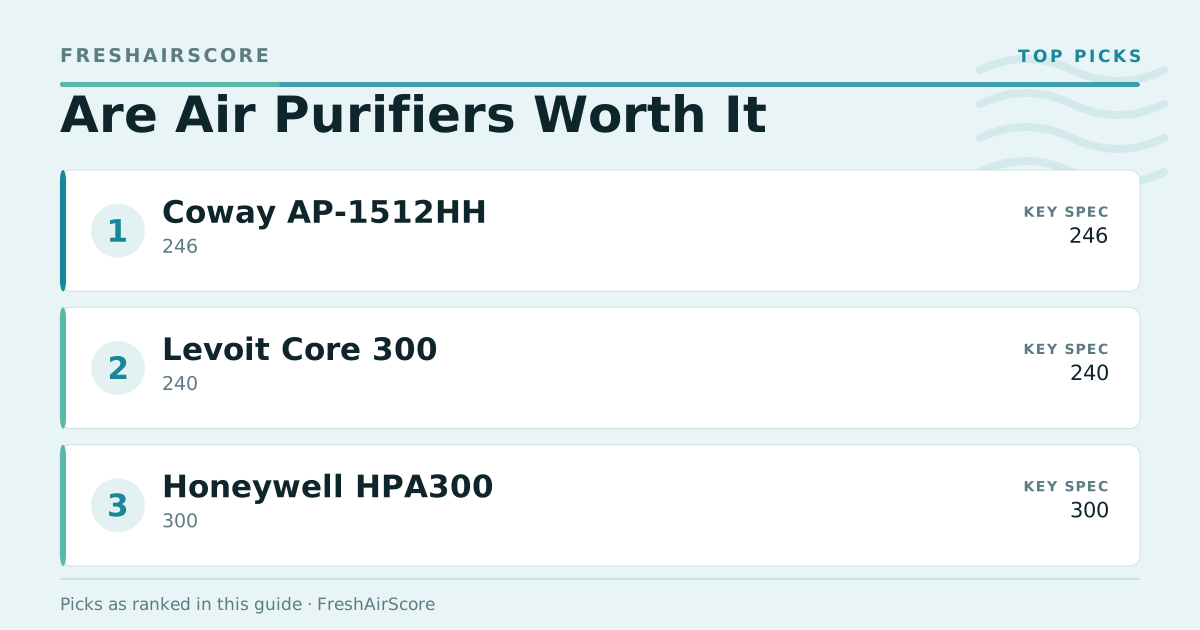
| Coway AP-1512HH | 246 | HEPA + Carbon | Up to 361 sq ft | Mid-range | 24 dB |
| Levoit Core 300 | 240 | HEPA + Carbon | Up to 219 sq ft | Budget | 25 dB |
| Honeywell HPA300 | 300 | HEPA | Up to 450 sq ft | Mid-range | 50 dB |
| Blueair Blue Pure 211+ | 350 | HEPA + Carbon | Up to 540 sq ft | Premium | 31 dB |
| Dyson Pure Cool TP01 | 290 | HEPA + Carbon | Up to 600 sq ft | Premium | 42 dB |
Detailed Analysis of Each Product
Coway AP-1512HH
- Pros: Compact, performs great in small to medium rooms, won’t spike your electric bill.
- Cons: Filter replacements cost more than I’d like.
Levoit Core 300
- Pros: Budget-friendly, lightweight, whisper quiet.
- Cons: Skip this if you need to cover a large room.
Honeywell HPA300
- Pros: Handles large spaces well, multiple fan speeds.
- Cons: Gets loud on high settings – not ideal for bedrooms.
Blueair Blue Pure 211+
- Pros: Actually looks good in your home, great for large rooms, energy efficient.
- Cons: Pricier than some alternatives.
Dyson Pure Cool TP01
- Pros: Works as both purifier and fan, sleek design.
- Cons: Expensive for what you get – I’d skip this unless you really need the fan feature.
Practical Tips for Using Air Purifiers
-
Optimal Placement: Put it where you spend the most time. Keep it away from walls so air can flow freely.
-
Regular Filter Maintenance: Change filters every 6-12 months or your purifier becomes expensive decoration. Treated well, a good unit runs for years — here’s how long air purifiers typically last.
-
Run Continuously: Keep it running 24/7 for best results, especially if you have pets or live in a polluted area. For pet owners, check out our post on Best Air Purifier For Pet Allergies.
-
Monitor Air Quality. To understand more about monitoring your air, read our comparison of Awair Vs Airthings Air Quality Monitor.: Get an air quality monitor to see if your purifier is actually making a difference.
-
Combine with Other Solutions: Purifiers work best alongside good ventilation, regular cleaning, and humidity control.
FAQ
Do air purifiers really work?
Yes, they genuinely remove allergens, dust, and pollutants. The difference is noticeable if you get a decent unit.
How long does it take for an air purifier to clean the air?
Most can clean a room’s air in 15-30 minutes, depending on CADR and room size.
How often should I run my air purifier?
24/7 for best results, especially during allergy season or in high-pollution areas.
Are air purifiers safe for children and pets?
Yes, just avoid ozone-producing models and stick with certified units.
What maintenance do air purifiers require?
Replace filters regularly, wipe down the unit occasionally, and follow the manual’s guidelines.
Bottom Line
An air purifier is a smart buy if you care about the air you’re breathing, especially with allergies or respiratory issues. Get the right model based on CADR, filter type, and room size, and you’ll notice cleaner air pretty quickly. Just remember – proper maintenance and placement make all the difference between a helpful device and an expensive dust collector.